You can have a lush, gorgeous, wildlife supporting garden in shade. You can have native plants and not just the default hosta or astilbe. You can have a low maintenance space that requires no fertilizer, no supplemental watering, and only one annual mowing. But you'll have to replace some of the plants that bunnies eat.
Below is a quick trip through one client's front yard makeover: how we did it, what we used, and what issues have arisen after one year. The space was installed in May 2019 while the after images come from May 2020.
Below is a quick trip through one client's front yard makeover: how we did it, what we used, and what issues have arisen after one year. The space was installed in May 2019 while the after images come from May 2020.
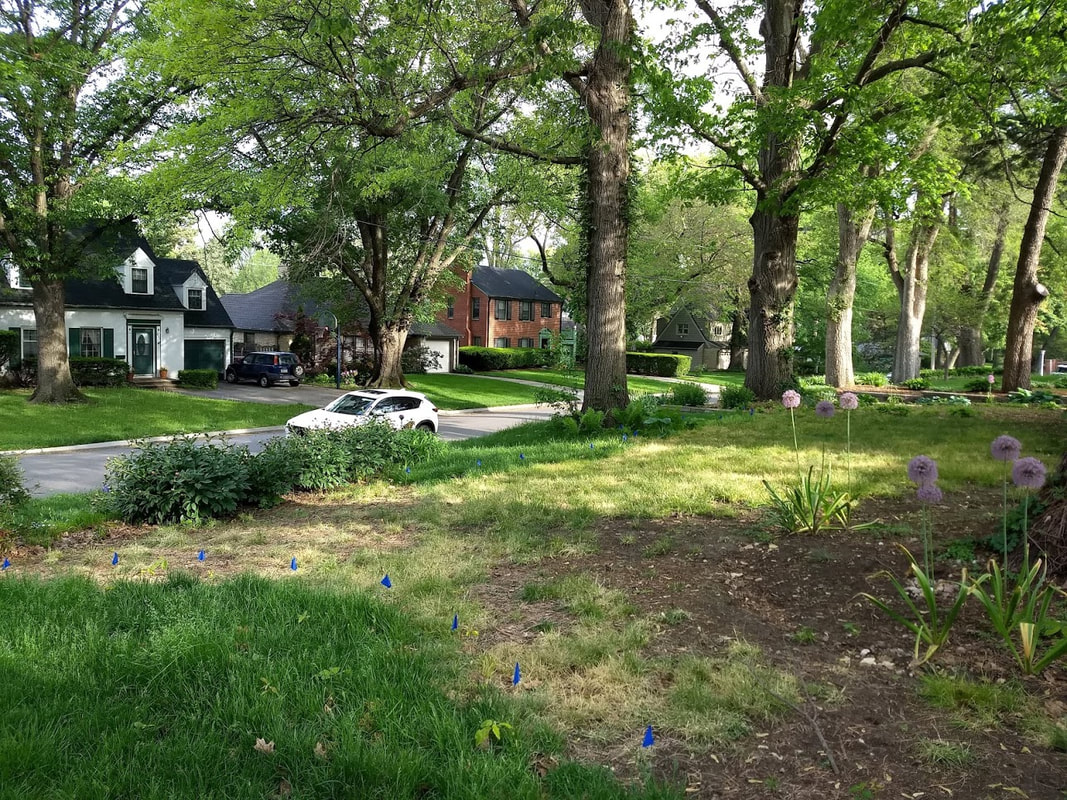
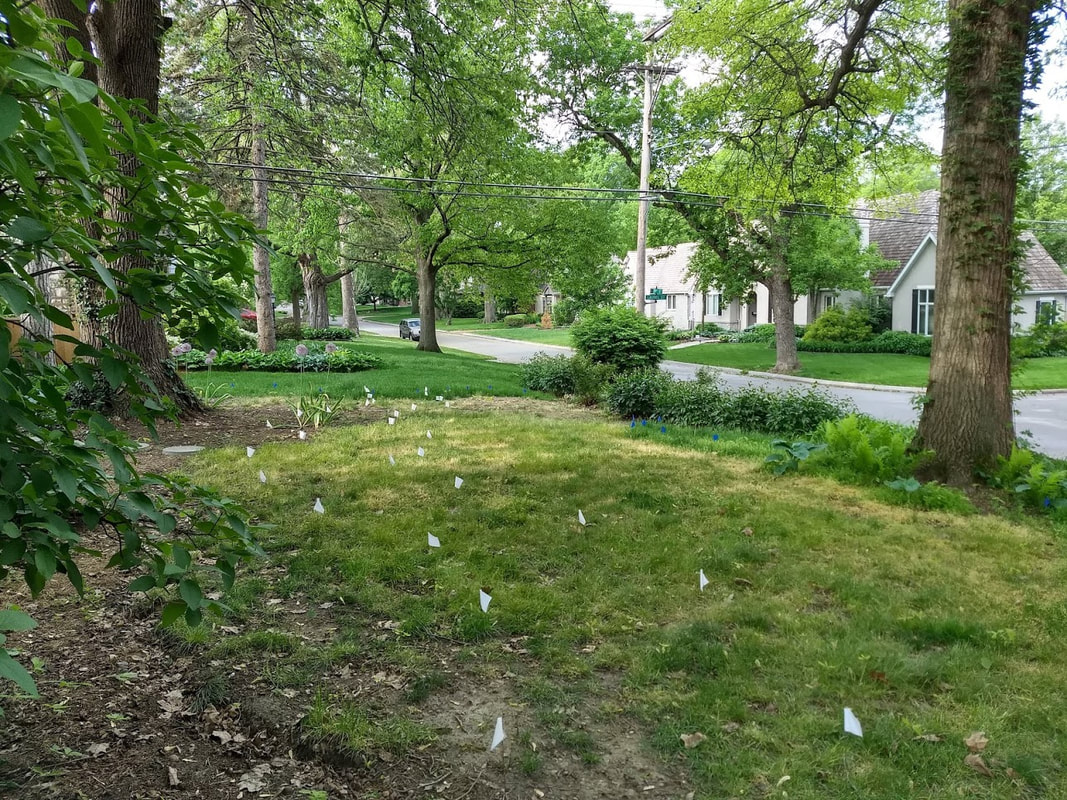
This Lincoln landscape is in an older, urban neighborhood that's well maintained (from a traditional mow and blow perspective). The front yard has several mature oak trees that provide shade to 85% of the beds, except for one corner that gets a few hours of late afternoon and evening sun. In that corner we placed more sun-loving forbs.
You'll notice the white flags, which will be the path, and blue flags that show the edge of the main area. We hope to extend that area further down hill in the future and take out more lawn; as the client says, their goal was to have less to mow and provide more for pollinators (as well as have lots of sedge -- but we'll get to that soon). I was also convinced to leave a few of the hosta on site, and I'm glad I was as they aid in some first year texture until the new native forbs get established.
You'll notice the white flags, which will be the path, and blue flags that show the edge of the main area. We hope to extend that area further down hill in the future and take out more lawn; as the client says, their goal was to have less to mow and provide more for pollinators (as well as have lots of sedge -- but we'll get to that soon). I was also convinced to leave a few of the hosta on site, and I'm glad I was as they aid in some first year texture until the new native forbs get established.
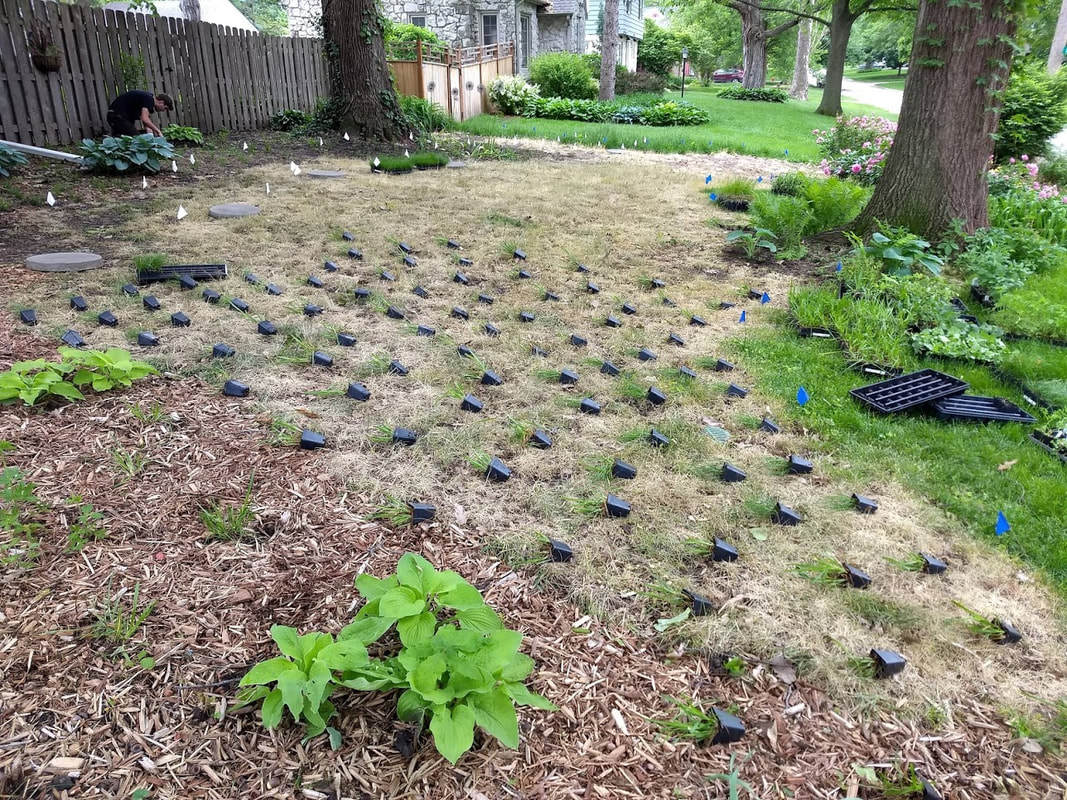
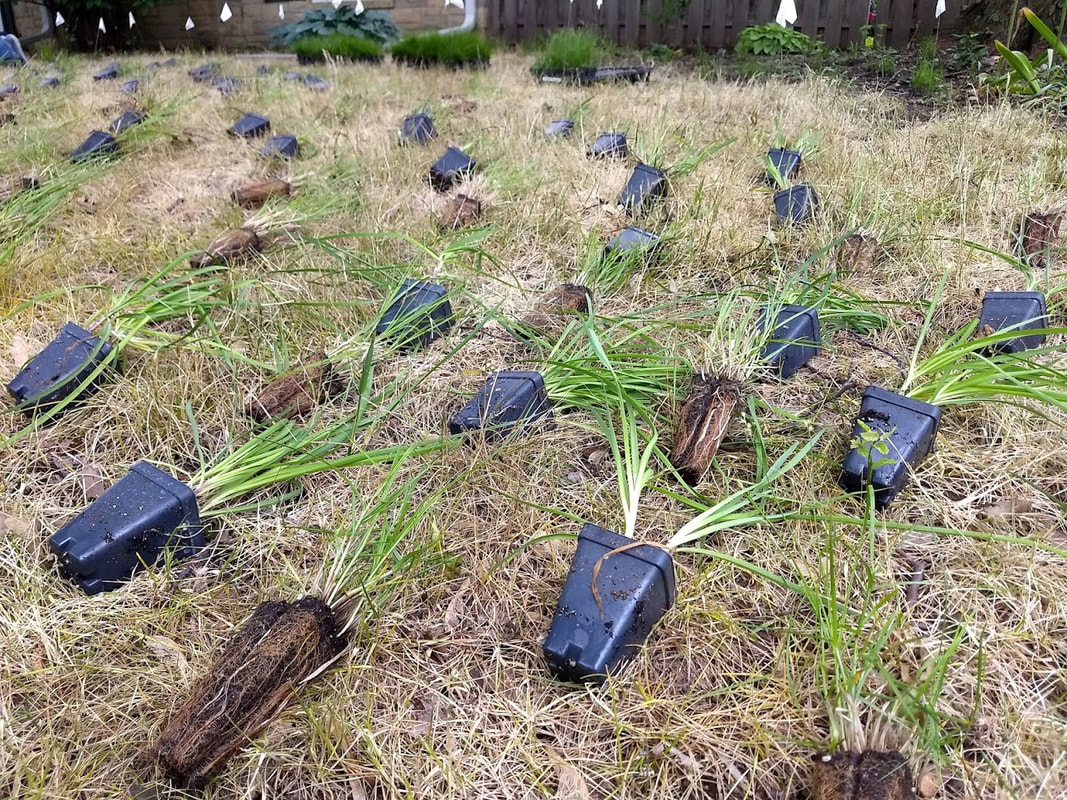
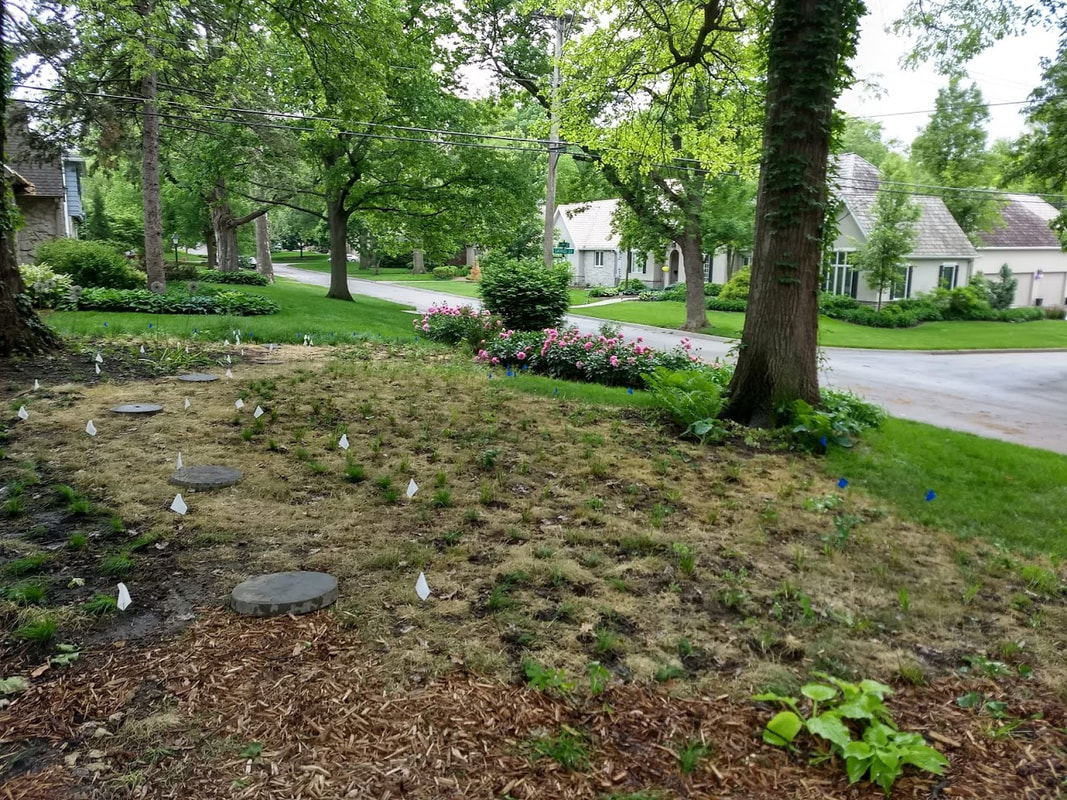

We spray killed the lawn to limit soil disturbance; limiting disturbance means fewer weed problems, and dead grass provides a weed barrier, erosion control, and a temporary mulch for the first year. I usually arrive about an hour before my crew to start laying out plants. In this case I had about a dozen forbs and five species of sedge. For the sedge, I interwove and interlocked large groupings of Carex albicans, blanda, brevior, eburnea, and radiata. Each sedge provides different growth styles and texture, along with variable seed heads in early summer. Some of the shade forbs we used include:
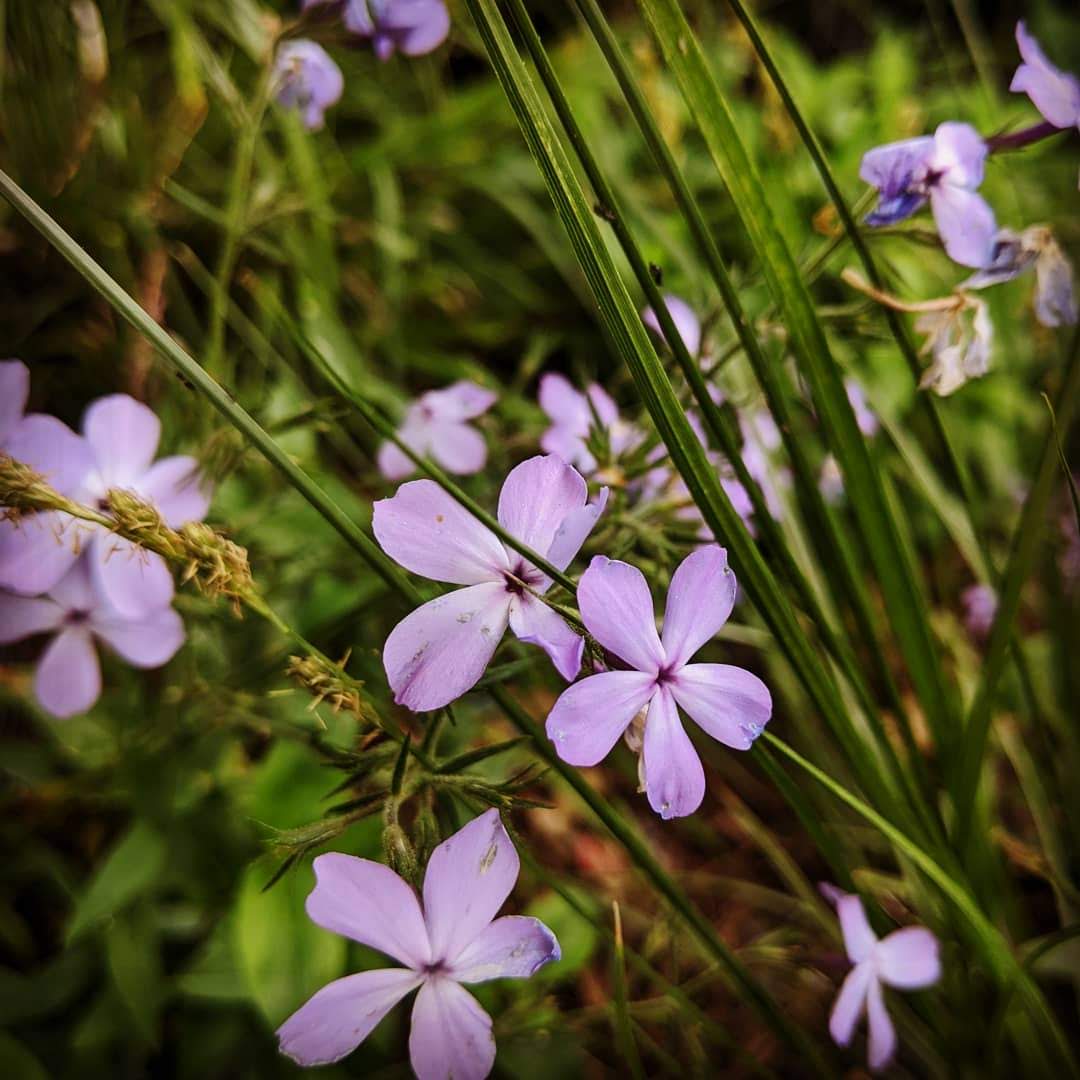
Phlox divaricata (woodland phlox)
Aquilegia canadensis (wild columbine)
Geranium maculatum (wild geranium)
Anemone virginiana (tall thimbleweed)
Thalictrum dioicum (early meadow rue)
Solidago flexicaulis (zigzag goldenrod)
Symphyotrichum lateriflorum (calico aster)
Polygonatum biflorum (solomon's seal)
Asarum canadense (wild ginger)
Phlox divaricata (woodland phlox)
Aquilegia canadensis (wild columbine)
Geranium maculatum (wild geranium)
Anemone virginiana (tall thimbleweed)
Thalictrum dioicum (early meadow rue)
Solidago flexicaulis (zigzag goldenrod)
Symphyotrichum lateriflorum (calico aster)
Polygonatum biflorum (solomon's seal)
Asarum canadense (wild ginger)

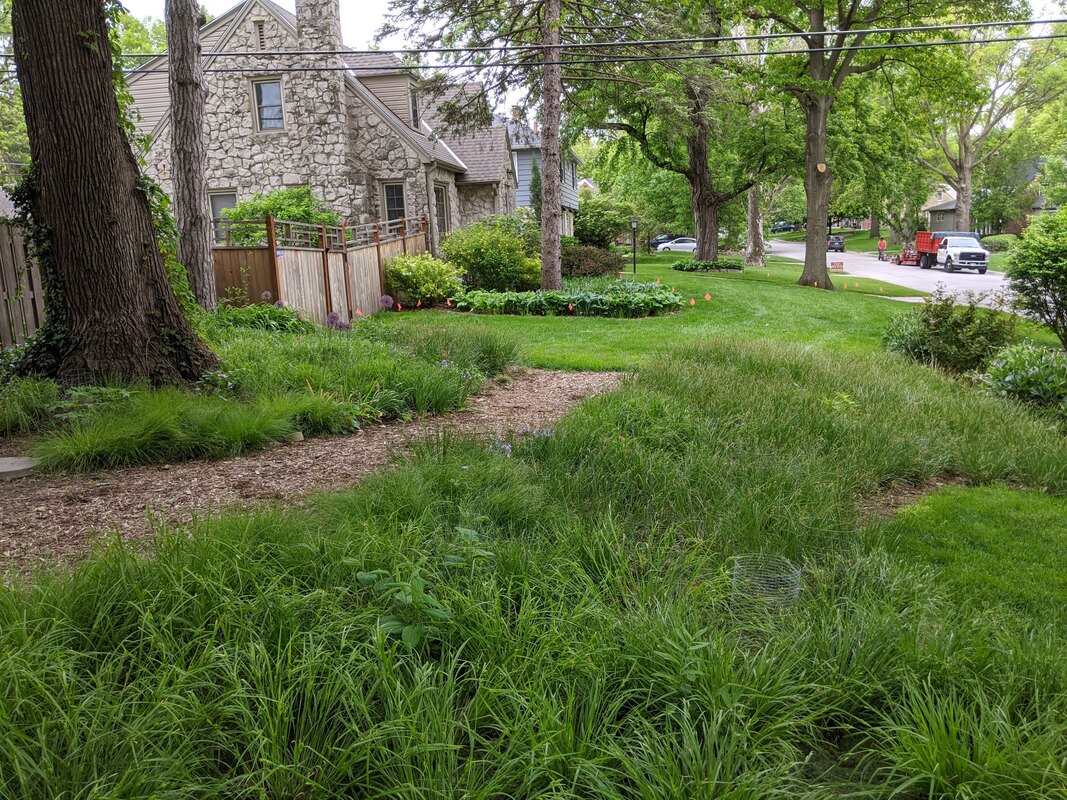
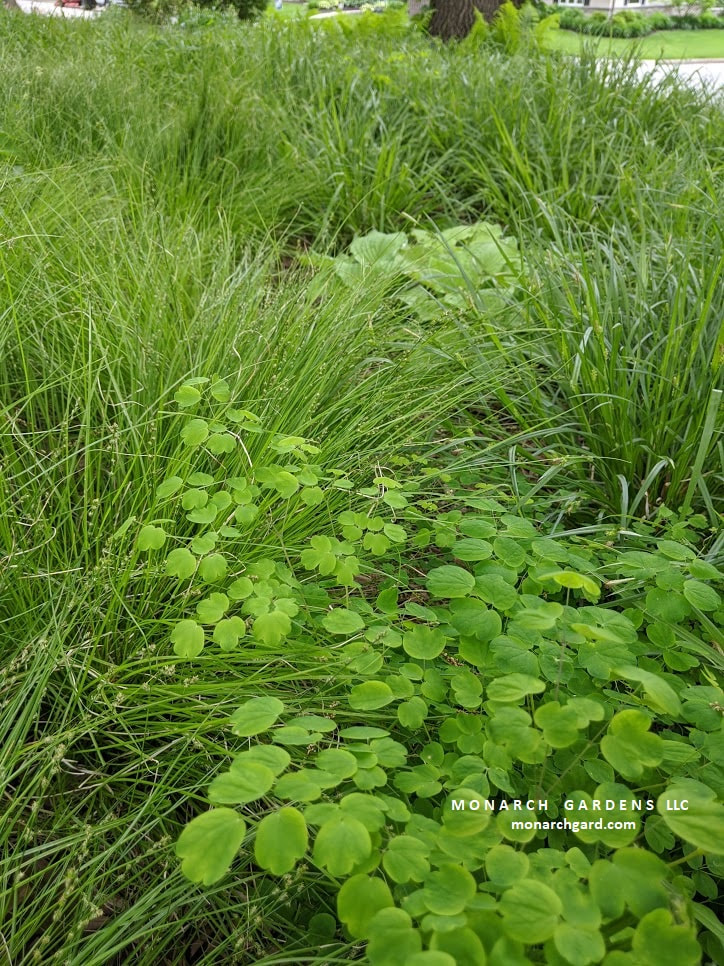

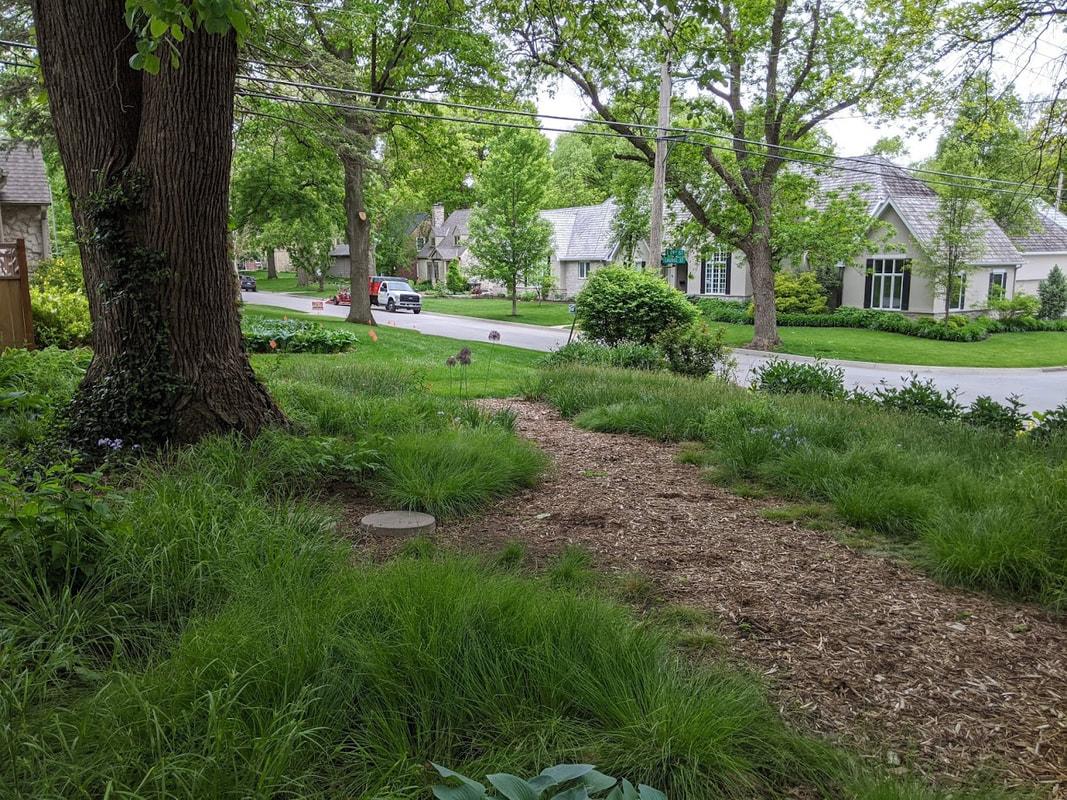
The sedge has grown far more quickly than I anticipated -- partly because the soil is loose and rich, and partly because these species are adapted to shade. This good shade under oaks also increases soil moisture in the cool growing seasons (spring and fall) while keeping weeds down. Rabbits have gone after young forbs somewhat aggressively, so until those plants get established and start spreading, chicken wire cages have been employed. Other than that, the garden requires only an early March mow and no watering.
Can't have a meadow under mature trees? Sure you can. A sedge meadow.
Can't have a meadow under mature trees? Sure you can. A sedge meadow.

 RSS Feed