We know all about the impact urban lawns have on the ecosystem, from pollution to habitat loss. We've heard the stories about bees and butterflies and birds struggling to find food and host plants for their young in urban areas. And we're bombarded with possible solutions that we can follow at home as we make authentic searches into ourselves about what we can do and how we can get empowered.
One of the many solutions proposed to help pollinators, like bees, is a dutch white clover lawn. It might be the only plant comprising the lawn, it could be sprinkled in among a fescue or other turf-type grass, or it might be part of a slightly more diverse community of native and exotic groundcover plants like wild violets and wood sorrel and dandelion.
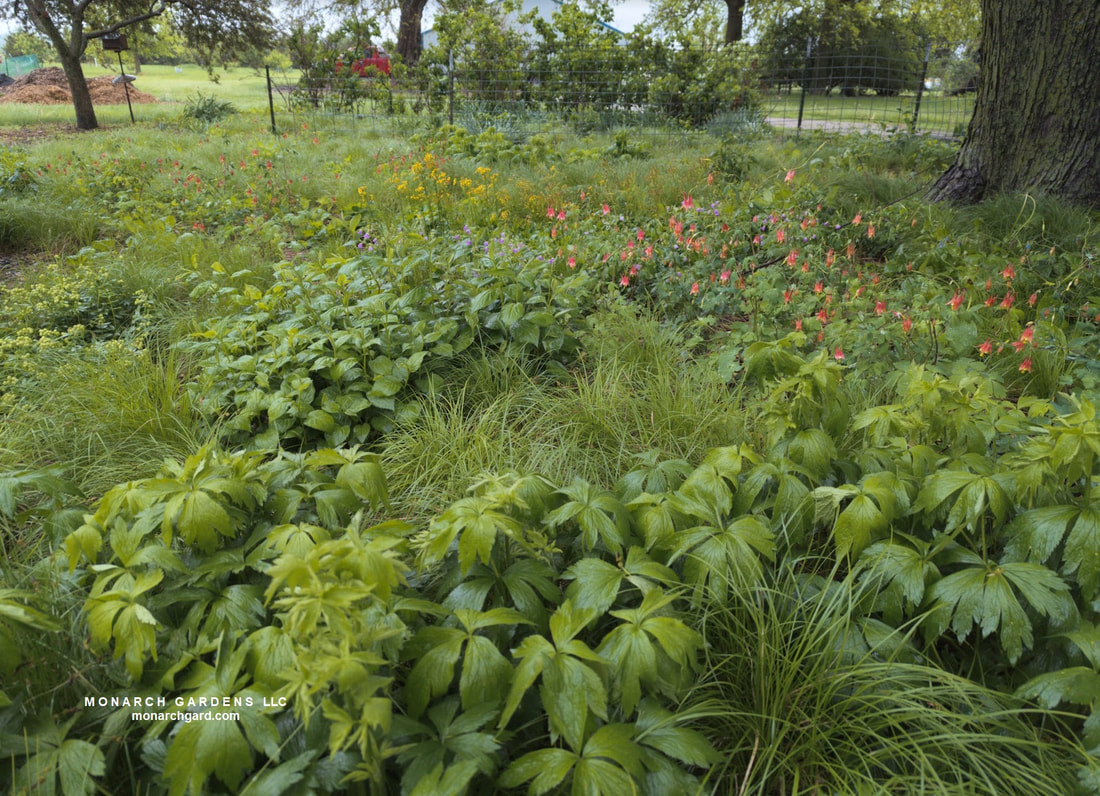
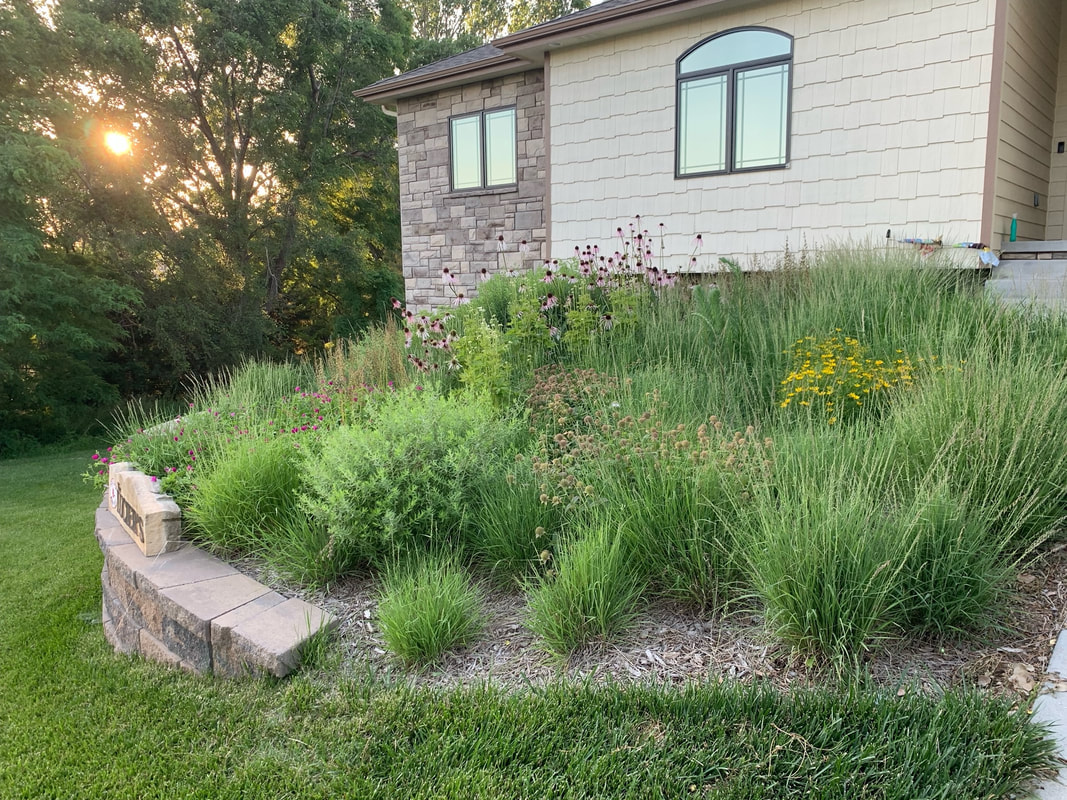
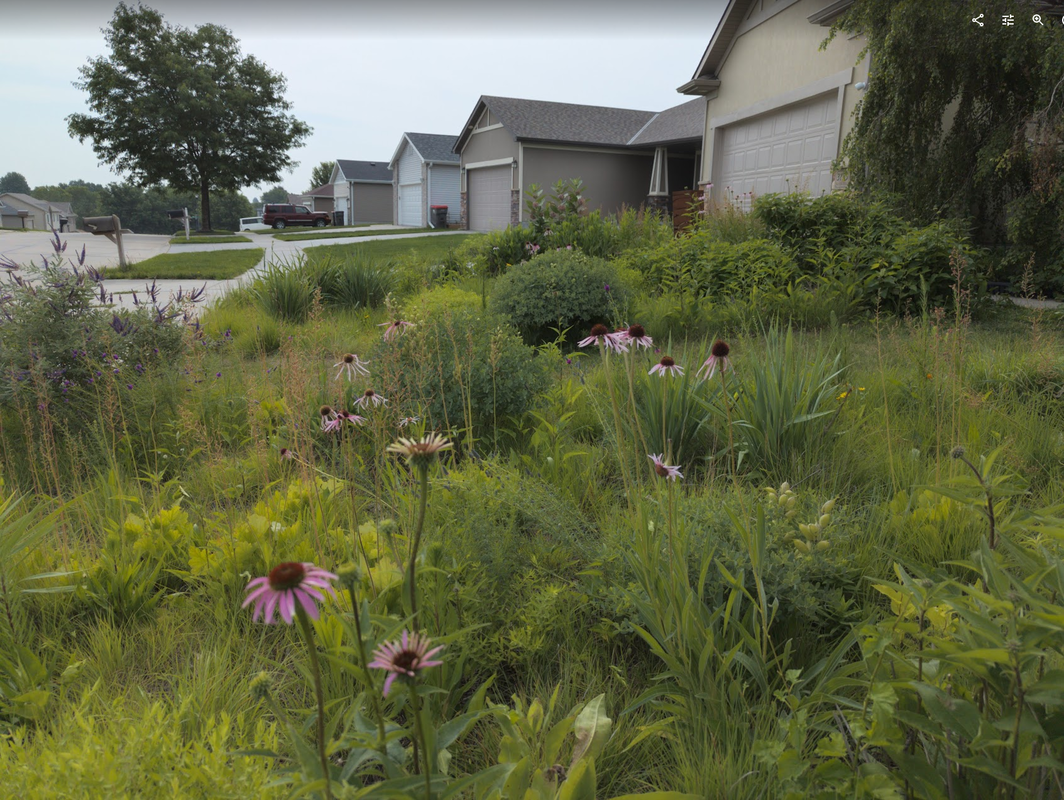
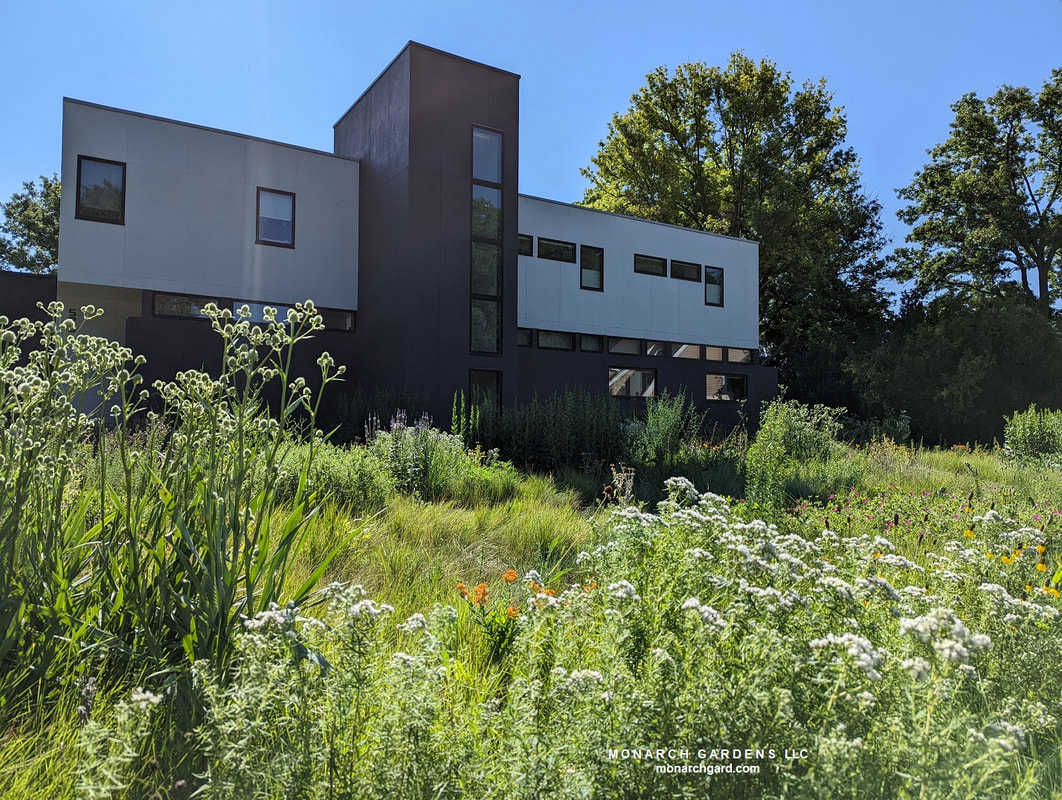
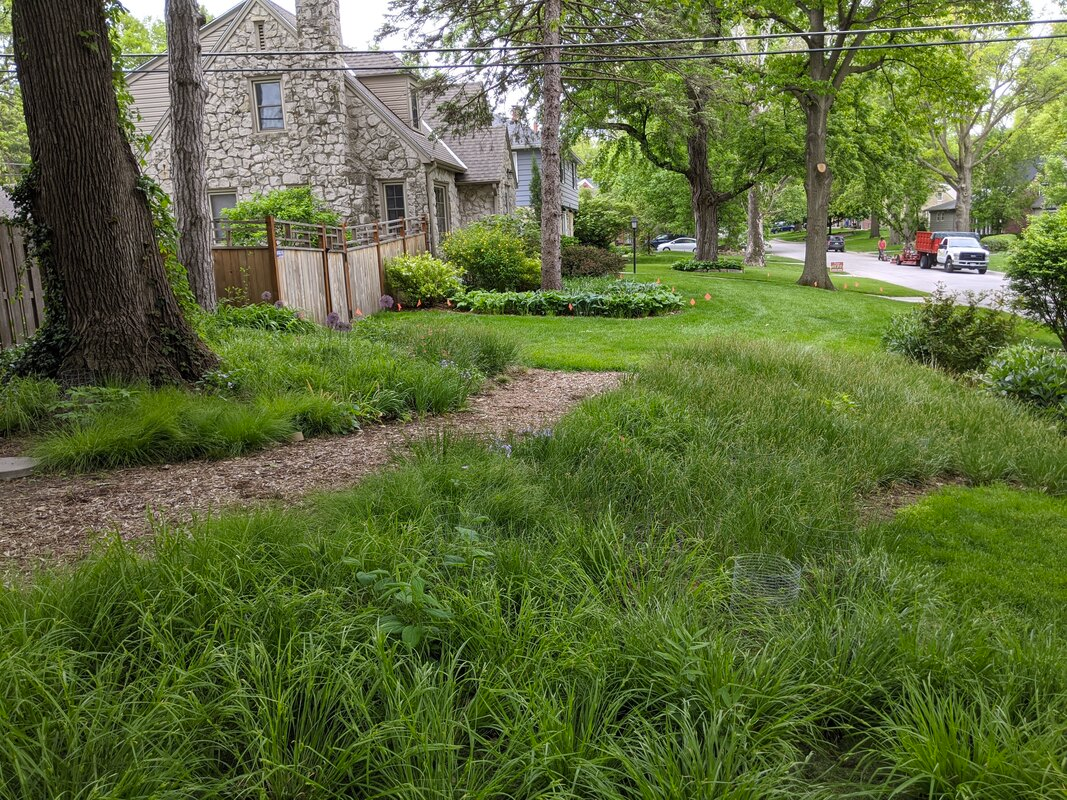
But dutch white clover is not an effective answer to habitat or even other environmental issues caused by wall to wall carpeting. The big question we need to be asking ourselves is how much lawn-type space do we really need? Why? (And why so much around business parks and corporate offices?) How can we at least greatly reduce it or even eliminate it? The goal of gardening for wildlife and habitat is not to switch out one monoculture for another monoculture or near monoculture -- the goal is diversity. Diversity in plant species, plant type, height, blooms, bloom times, winter structure, etc.
Here are some of the drawbacks to a dutch white clover lawn:
What are ecosystem services, anyway? Here's a partial list:
The primary reason for a lawn or lawn-type landscape, especially in suburban contexts, is a play space for kids. The assumption being kids need to kick a ball around or play croquet -- that's playing. In our neighborhood, the average size of a lot is around 7,500 square feet, and the house will take up around 1,500 feet, the driveway another few hundred, plus patios, sidewalks, and decks. There's very, very little room left for tag football, soccer, tossing a novelty flying disk, etc so most kids end up in the streets, which is obviously not advisable unless you live on a cul-de-sac.
However, what a less-lawn landscape provides is increased areas of play, not less. We're talking creative play, and we're talking contact with other species which has been scientifically proven to build empathy. Contact with nature increases critical thinking skills and imagination and ability to work with others. Contact with nature increases exposure to beneficial microbes which reduce chances of kids developing allergies. A more natural landscape -- one with taller grasses, flowers, shrubs, and trees -- creates infinite habitat of possibility for imaginative and out-of-the-box play that lasts for hours, not to mention ideal hide and go seek habitat. (Books by Richard Louv will be of great interest on this topic.)
Kids don't need lawn. They need diverse habitat, and they aren't getting it at home or school. Instead, there's still this pervasive fear that nature is out to get us and our kids. Flowers will invite wasps -- beneficial predators which are simply carnivorous bees -- and dense plantings will expose kids to ticks (lawns expose kids to chiggers which are also pretty awful). Ticks are a valid concern, and strategies to design a space and work with wildness are included in this post.
A dutch white clover lawn is a very small incremental step above a turf-type lawn. While it's hopefully not being mowed every week with a machine spewing out environmental toxins, being maintained with dangerous herbicides and fertilizers that directly threaten kids playing on lawn or their drinking of polluted water, a clover lawn's environmental benefits are otherwise only marginally better than a traditional suburban lawn. If it's a baby step, it's a very small baby step, and unless it actually leads to more significant change it's a step that doesn't really matter.
Perhaps the clover lawn -- pushed by another problematic call-to-action in No Mow May -- suffers the same psychological issues as that surrounding butterfly bush; namely, that we think we are doing something beneficial but discover there's more nuance and more to learn, which feels both overwhelming and even a little incriminating. (Butterfly bush is not a host plant and only provides resources for a very limited number of insects, while becoming invasive in some parts of the United States.)
The goal of this post is not to to make anyone feel bad, but to explore that if our goals truly are ecological gardening that's climate resilient and sustainable and benefits all species to the max, a clover lawn is a pale imitation of even a low meadow with diverse layers and plant species. There are a cornucopia of free posts on this site about how to create a lawn-to-meadow conversion in sun or shade, as well as the more in-depth video classes and, of course, the book Prairie Up. Hopefully, perusing them will leave you empowered and ready to rethink pretty, unlawn America, and garden for the community in engaging ways. And, if you're worried about local weed ordinances we've got that covered, too. You are the change we all need to see. Every garden matters.
One of the many solutions proposed to help pollinators, like bees, is a dutch white clover lawn. It might be the only plant comprising the lawn, it could be sprinkled in among a fescue or other turf-type grass, or it might be part of a slightly more diverse community of native and exotic groundcover plants like wild violets and wood sorrel and dandelion.
But dutch white clover is not an effective answer to habitat or even other environmental issues caused by wall to wall carpeting. The big question we need to be asking ourselves is how much lawn-type space do we really need? Why? (And why so much around business parks and corporate offices?) How can we at least greatly reduce it or even eliminate it? The goal of gardening for wildlife and habitat is not to switch out one monoculture for another monoculture or near monoculture -- the goal is diversity. Diversity in plant species, plant type, height, blooms, bloom times, winter structure, etc.
Here are some of the drawbacks to a dutch white clover lawn:
- It's still a monoculture or near monoculture with limited resources for adult insects and their young.
- It's an exotic species that co-evolved with honey bees. Thus, primarily honey bees will be using it. Honey bees are an exotic species that out compete native bees, spread disease, steal resources, etc.
- If the goal of an alternative lawn is to end mowing, a clover lawn still does need to be occasionally mowed. A short meadow only needs mowing 1x per year in the spring cut down.
- The ecosystem services of a short, 6" tall or less groundcover are far, far fewer compared to a slightly taller meadow garden of 12-18" in height.
What are ecosystem services, anyway? Here's a partial list:
- Diverse blooms for a variety of pollinators at different times of year. Different flowers for different needs.
- Host plants for insect and bug larvae, most often native plants that fauna co-evolved with. No host plants, no new insects.
- Cleaning and cooling the air (thicker, lusher, taller plantings do it better).
- Cleaning, amending, rebuilding the soil (thicker, lusher plantings do it better with deeper root systems).
- Reducing stormwater runoff during extreme weather events (thicker, lusher, taller plantings do it better).
- Overall habitat for a diverse set of species (thicker, lusher plantings do it better).
The primary reason for a lawn or lawn-type landscape, especially in suburban contexts, is a play space for kids. The assumption being kids need to kick a ball around or play croquet -- that's playing. In our neighborhood, the average size of a lot is around 7,500 square feet, and the house will take up around 1,500 feet, the driveway another few hundred, plus patios, sidewalks, and decks. There's very, very little room left for tag football, soccer, tossing a novelty flying disk, etc so most kids end up in the streets, which is obviously not advisable unless you live on a cul-de-sac.
However, what a less-lawn landscape provides is increased areas of play, not less. We're talking creative play, and we're talking contact with other species which has been scientifically proven to build empathy. Contact with nature increases critical thinking skills and imagination and ability to work with others. Contact with nature increases exposure to beneficial microbes which reduce chances of kids developing allergies. A more natural landscape -- one with taller grasses, flowers, shrubs, and trees -- creates infinite habitat of possibility for imaginative and out-of-the-box play that lasts for hours, not to mention ideal hide and go seek habitat. (Books by Richard Louv will be of great interest on this topic.)
Kids don't need lawn. They need diverse habitat, and they aren't getting it at home or school. Instead, there's still this pervasive fear that nature is out to get us and our kids. Flowers will invite wasps -- beneficial predators which are simply carnivorous bees -- and dense plantings will expose kids to ticks (lawns expose kids to chiggers which are also pretty awful). Ticks are a valid concern, and strategies to design a space and work with wildness are included in this post.
A dutch white clover lawn is a very small incremental step above a turf-type lawn. While it's hopefully not being mowed every week with a machine spewing out environmental toxins, being maintained with dangerous herbicides and fertilizers that directly threaten kids playing on lawn or their drinking of polluted water, a clover lawn's environmental benefits are otherwise only marginally better than a traditional suburban lawn. If it's a baby step, it's a very small baby step, and unless it actually leads to more significant change it's a step that doesn't really matter.
Perhaps the clover lawn -- pushed by another problematic call-to-action in No Mow May -- suffers the same psychological issues as that surrounding butterfly bush; namely, that we think we are doing something beneficial but discover there's more nuance and more to learn, which feels both overwhelming and even a little incriminating. (Butterfly bush is not a host plant and only provides resources for a very limited number of insects, while becoming invasive in some parts of the United States.)
The goal of this post is not to to make anyone feel bad, but to explore that if our goals truly are ecological gardening that's climate resilient and sustainable and benefits all species to the max, a clover lawn is a pale imitation of even a low meadow with diverse layers and plant species. There are a cornucopia of free posts on this site about how to create a lawn-to-meadow conversion in sun or shade, as well as the more in-depth video classes and, of course, the book Prairie Up. Hopefully, perusing them will leave you empowered and ready to rethink pretty, unlawn America, and garden for the community in engaging ways. And, if you're worried about local weed ordinances we've got that covered, too. You are the change we all need to see. Every garden matters.

 RSS Feed