Daffodils and snowdrops are not a sign of spring anywhere in North America. And they aren't all that helpful to insects or bugs.
This time of year there's not (typically) supposed to be that much if anything in bloom -- at least not where you think it should be (the ground plane). That being said, there are plenty of things blooming by me, disturbingly early this year, like pussy willow (Salix discolor), American elm (Ulmus americana), red maple (Acer rubrum), ground plum (Astragalus crassicarpus), and pasque flower (Anemone patens) that if there was anything (native) out a month earlier than is typical, there would be resources -- especially for generalists. Yesterday on the maple there were some fly species and honey bees, which is typical to see on maple; as you may recall from previous posts here, honey bees are livestock and a nonnative species that steals resources from native bees while easily spreading disease.
Regarding snowdrops and daffodils, you're not helping pollinators with pollen / nectar resources if there aren't any pollinators yet emerged, especially those who co-evolved to use specific plants that aren't yet active. (And if anyone can provide a study on daffodil pollen nutrition compared to early-season native plant resources in various ecoregions, I'd appreciate seeing it.)
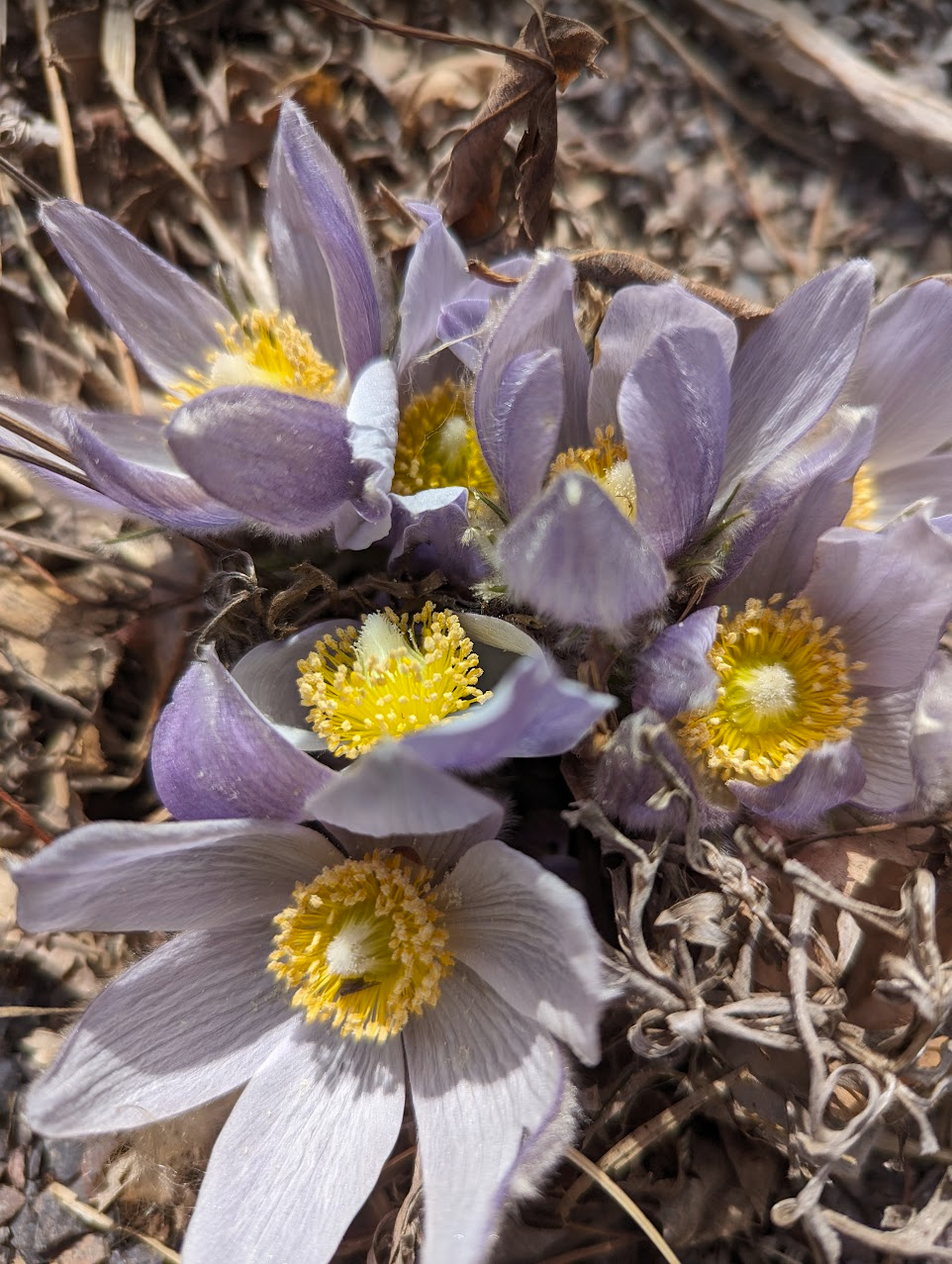
But I wonder, with all these willow, elm, maple, pasque flowers (see image below) blooming weeks early, what will pollinators that specialize or rely on using them do when they eventually emerge at the usual time? Maybe there will be other things in bloom as spring rolls on early thanks to human-caused climate change? (And what will some trees, leafing out now, do when we hit 20 later this week?) This is the problem with climate change, and why, as gardeners, I think it behooves us to think and act more locally, which in turn confronts the larger systemic issues up the chain in our culture. (I often feel that native plant proponents get easy vitriol because they're also trying to say larger things about culture as a whole, things we don't want to confront, are unable to confront, or are ill-equipped / unprepared to confront because they are so large and so systemic we just shut down at the enormity and complexity of it all.)
Is planting daffs or snowdrops causing ecological harm? Probably not. But greenwashing them by pretending / assuming they have benefit -- in large part because you likely want to see more early spring color than the local ecosystem / ecoregion provides -- is part of horticultural colonization and human supremacy, not concern for the environment or the plight of insects and bugs.
I've tried hard not to write this post this year -- as well as the last several years -- because it feels like I'm simply just trying to start something, because ultimately we need to come together. Folks who disagree, which is totally cool by the way, will call this post out as simple native plant dogma. First, labeling is a way to dismiss an idea the rubs you the wrong way or makes you uncomfortable or asks you to think outside a comfort zone, and second, what about the prevailing dogma of dominant / traditional hort that is all about colonization and privileging the human first in a landscape? Which is an extension of just about all of western culture.
We need a deep, deep rethink and daffodils, at least in the hort world, often become that flashpoint as we reckon with how hort is a part of our privilege, and how our identities are so wrapped up in it we feel we need to defend that privilege because we assume we're being personally attacked when larger systems are being critiqued (same thing applies to capitalism or even sexism / racism, but that's a whole new topic and added layer so let's just stick to pretty flowers and for whom those flowers are pretty -- and yet social justice is tied to environmental justice, just ask the entire ecofeminist wing of activism and philosophy, as well as deep ecologists).
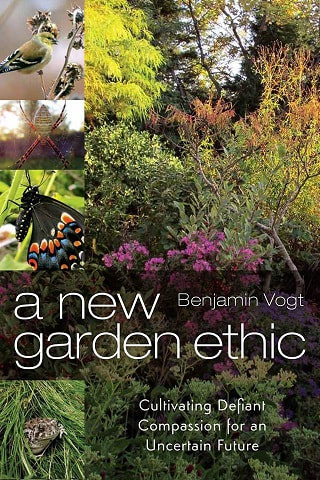
Personally, I feel daffodils, especially, take me out of my home place, remove me from this region, and also -- quite simply -- look very out of place in a meadow or prairie. I also feel that planting them is an act of being unhappy with what is, not appreciating your local ecoregion, or fully celebrating the local rhythms and realities of place -- but that whole conversation might seem too woo-woo for some folks, and that's ok as I address it more in A New Garden Ethic.
Now, there are no plant police. No one is coming to fine you or remove your daffodils like the legit plant police will do when a neighbor reports you for having anything but lawn, including an errant dandelion let alone a meadow garden of natives or daffodils with natives (who wants to discuss the pros and cons of dandelions yet again in a future post?).
So, in summary, daffodils are primarily just for you. If you're ok with that hey, no one is coming with a threatening letter or an orange sign staked into your garden, so enjoy your privilege to plant what you like. Just, please, stop pretending or assuming daffodils and snowdrops are for wildlife -- that's where the issue really flounders. And thank you for having less lawn or doing something different than a typical monoculture lawn.
This time of year there's not (typically) supposed to be that much if anything in bloom -- at least not where you think it should be (the ground plane). That being said, there are plenty of things blooming by me, disturbingly early this year, like pussy willow (Salix discolor), American elm (Ulmus americana), red maple (Acer rubrum), ground plum (Astragalus crassicarpus), and pasque flower (Anemone patens) that if there was anything (native) out a month earlier than is typical, there would be resources -- especially for generalists. Yesterday on the maple there were some fly species and honey bees, which is typical to see on maple; as you may recall from previous posts here, honey bees are livestock and a nonnative species that steals resources from native bees while easily spreading disease.
Regarding snowdrops and daffodils, you're not helping pollinators with pollen / nectar resources if there aren't any pollinators yet emerged, especially those who co-evolved to use specific plants that aren't yet active. (And if anyone can provide a study on daffodil pollen nutrition compared to early-season native plant resources in various ecoregions, I'd appreciate seeing it.)
But I wonder, with all these willow, elm, maple, pasque flowers (see image below) blooming weeks early, what will pollinators that specialize or rely on using them do when they eventually emerge at the usual time? Maybe there will be other things in bloom as spring rolls on early thanks to human-caused climate change? (And what will some trees, leafing out now, do when we hit 20 later this week?) This is the problem with climate change, and why, as gardeners, I think it behooves us to think and act more locally, which in turn confronts the larger systemic issues up the chain in our culture. (I often feel that native plant proponents get easy vitriol because they're also trying to say larger things about culture as a whole, things we don't want to confront, are unable to confront, or are ill-equipped / unprepared to confront because they are so large and so systemic we just shut down at the enormity and complexity of it all.)
Is planting daffs or snowdrops causing ecological harm? Probably not. But greenwashing them by pretending / assuming they have benefit -- in large part because you likely want to see more early spring color than the local ecosystem / ecoregion provides -- is part of horticultural colonization and human supremacy, not concern for the environment or the plight of insects and bugs.
I've tried hard not to write this post this year -- as well as the last several years -- because it feels like I'm simply just trying to start something, because ultimately we need to come together. Folks who disagree, which is totally cool by the way, will call this post out as simple native plant dogma. First, labeling is a way to dismiss an idea the rubs you the wrong way or makes you uncomfortable or asks you to think outside a comfort zone, and second, what about the prevailing dogma of dominant / traditional hort that is all about colonization and privileging the human first in a landscape? Which is an extension of just about all of western culture.
We need a deep, deep rethink and daffodils, at least in the hort world, often become that flashpoint as we reckon with how hort is a part of our privilege, and how our identities are so wrapped up in it we feel we need to defend that privilege because we assume we're being personally attacked when larger systems are being critiqued (same thing applies to capitalism or even sexism / racism, but that's a whole new topic and added layer so let's just stick to pretty flowers and for whom those flowers are pretty -- and yet social justice is tied to environmental justice, just ask the entire ecofeminist wing of activism and philosophy, as well as deep ecologists).
Personally, I feel daffodils, especially, take me out of my home place, remove me from this region, and also -- quite simply -- look very out of place in a meadow or prairie. I also feel that planting them is an act of being unhappy with what is, not appreciating your local ecoregion, or fully celebrating the local rhythms and realities of place -- but that whole conversation might seem too woo-woo for some folks, and that's ok as I address it more in A New Garden Ethic.
Now, there are no plant police. No one is coming to fine you or remove your daffodils like the legit plant police will do when a neighbor reports you for having anything but lawn, including an errant dandelion let alone a meadow garden of natives or daffodils with natives (who wants to discuss the pros and cons of dandelions yet again in a future post?).
So, in summary, daffodils are primarily just for you. If you're ok with that hey, no one is coming with a threatening letter or an orange sign staked into your garden, so enjoy your privilege to plant what you like. Just, please, stop pretending or assuming daffodils and snowdrops are for wildlife -- that's where the issue really flounders. And thank you for having less lawn or doing something different than a typical monoculture lawn.
 RSS Feed