In the top three subjects I get asked the most about is native shade gardening. As in, the assumption that there aren't native plants for shade, that you can't grow anything in shade besides wood mulch, etc. I've talked a lot about this subject before -- on the blog and in an online class.
Here's a client's garden installed in spring of 2021. These images are from two weeks ago (so two years):
Here's a client's garden installed in spring of 2021. These images are from two weeks ago (so two years):
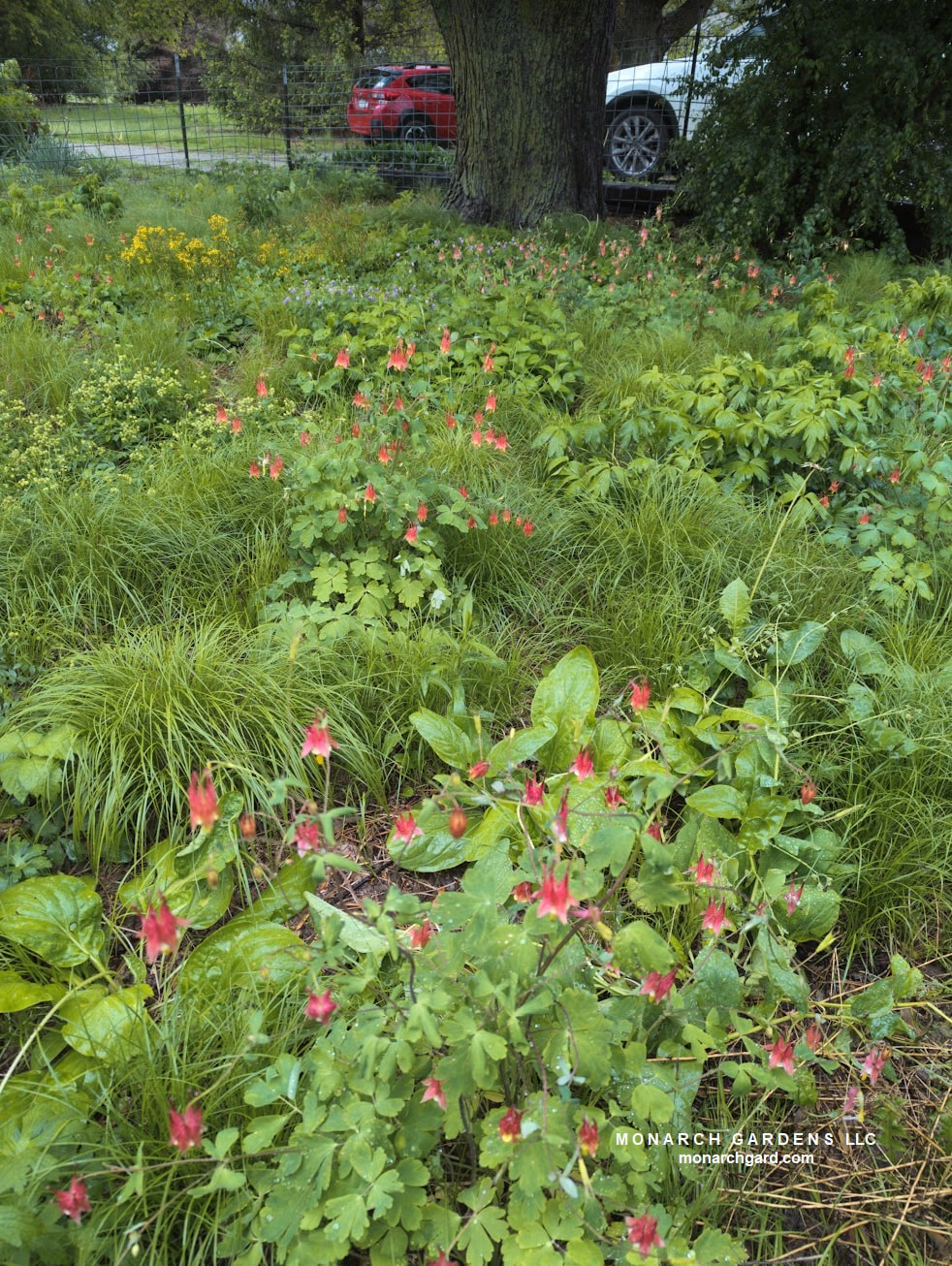
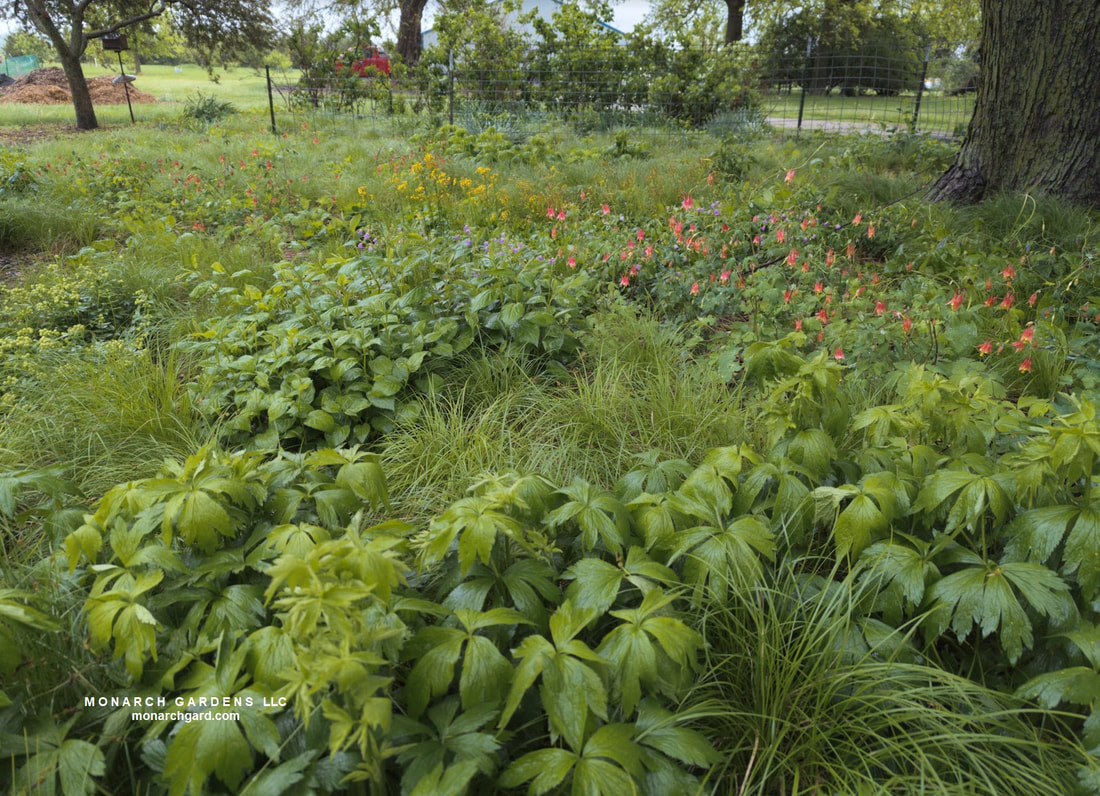
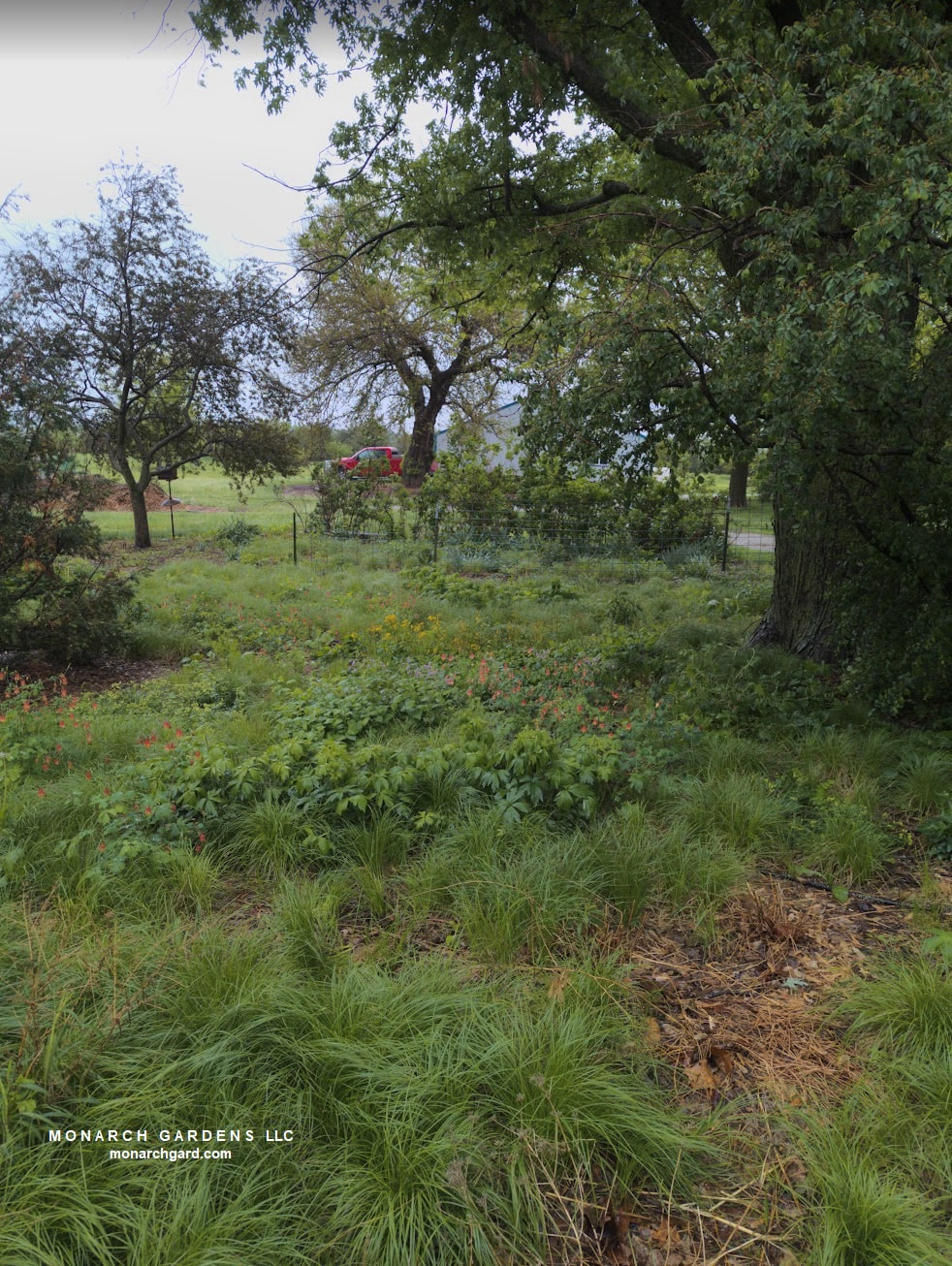
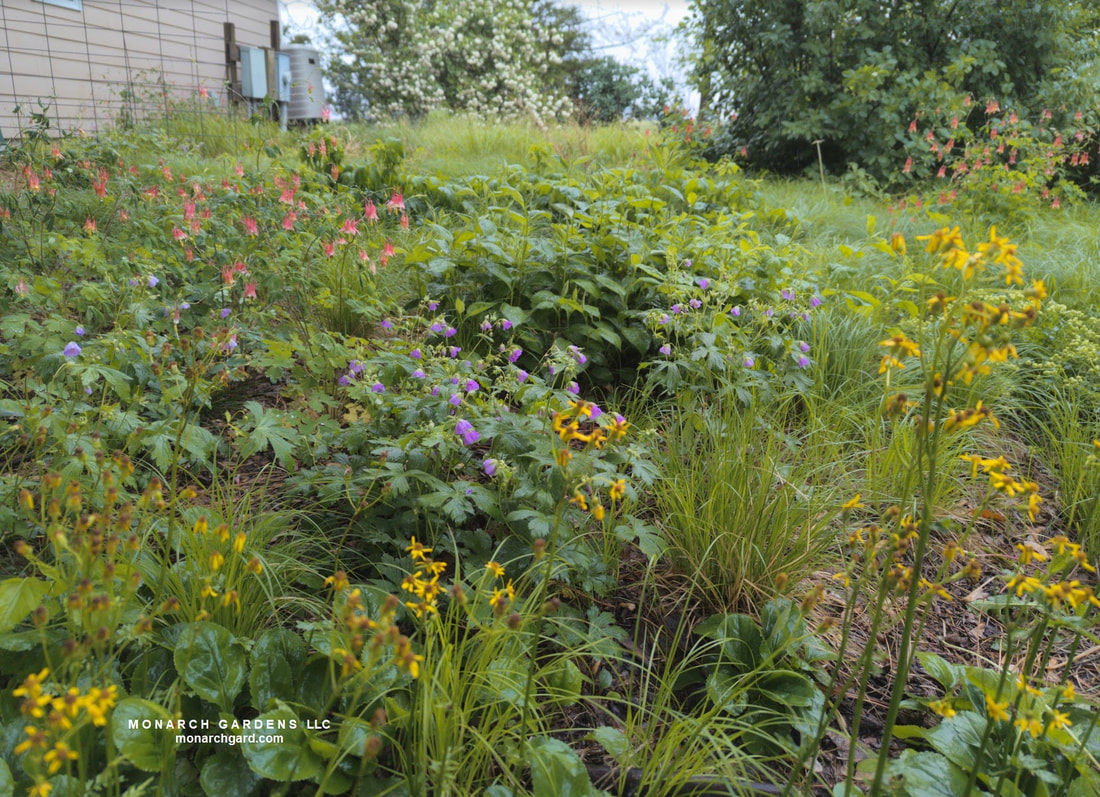
The site is a clay-loam under a mature overstory tree. It may receive a touch of direct or dappled light early in the morning. How is this garden put together, and what are the plant components?
It is pretty much a matrix of Carex pensylvanica, which runs a bit to fill in gaps and serves as the living green mulch (however, the entire site is a living green mulch and acts as a lovely soft landing for moth / butterfly caterpillars dropping from the tree above).
The forbs and emphemerals include:
Packera obovata (aurea would work too)
Geranium maculatum
Aquilegia canadensis
Polemonium reptans
Podophyllum peltatum
Anemone virginiana
Solidago flexicaulis
Eurybia macrophylla
Symphyotrichum lateriflorum
This is a very small list, and very basic. We could add a lot more diversity here while extending the season earlier in spring and into mid summer. Ephemerals would top that list, but we could also add Blephilia hirsuta and maybe even get away with Echinacea purpurea on the east and south edges near the tree's dripline. Polygonatum biflorum would be a neat early-mid spring addition for it's white blooms and contrasting foliage to the sedge. We could add in more sedge species, too, like Carex sprengelii.
However, I think aesthetically this "simple" garden creates a very nice bridge between a wild cacophony and suburban expectations of neat, ordered beds that don't look like someone vomited out flower seed and just stopped managing the space. We have enough density just with these plants to mostly out compete weeds -- something shade already helps with compared to full sun or more moist sites.
Plants were placed in masses and then allowed to express themselves. For example, Geranium shoots out seed to create scattered individuals and Packera self sows to create drifting colonies, while Solidago slowly runs to enlarge its clump.
These plants were matched to the site conditions first and foremost, but also to one another. The majority of these species compete at levels 2-3, meaning they are compatible based on their sociability index. Right now the Packera may be the only plant that needs some thinning.
The tree is happier having shade over its roots which increases organic matter and soil moisture. Wildlife is happy with more floral resources, host plants for larvae, and cover throughout the entire year. And shade gardening isn't the barrier we presume it to be. Right?
It is pretty much a matrix of Carex pensylvanica, which runs a bit to fill in gaps and serves as the living green mulch (however, the entire site is a living green mulch and acts as a lovely soft landing for moth / butterfly caterpillars dropping from the tree above).
The forbs and emphemerals include:
Packera obovata (aurea would work too)
Geranium maculatum
Aquilegia canadensis
Polemonium reptans
Podophyllum peltatum
Anemone virginiana
Solidago flexicaulis
Eurybia macrophylla
Symphyotrichum lateriflorum
This is a very small list, and very basic. We could add a lot more diversity here while extending the season earlier in spring and into mid summer. Ephemerals would top that list, but we could also add Blephilia hirsuta and maybe even get away with Echinacea purpurea on the east and south edges near the tree's dripline. Polygonatum biflorum would be a neat early-mid spring addition for it's white blooms and contrasting foliage to the sedge. We could add in more sedge species, too, like Carex sprengelii.
However, I think aesthetically this "simple" garden creates a very nice bridge between a wild cacophony and suburban expectations of neat, ordered beds that don't look like someone vomited out flower seed and just stopped managing the space. We have enough density just with these plants to mostly out compete weeds -- something shade already helps with compared to full sun or more moist sites.
Plants were placed in masses and then allowed to express themselves. For example, Geranium shoots out seed to create scattered individuals and Packera self sows to create drifting colonies, while Solidago slowly runs to enlarge its clump.
These plants were matched to the site conditions first and foremost, but also to one another. The majority of these species compete at levels 2-3, meaning they are compatible based on their sociability index. Right now the Packera may be the only plant that needs some thinning.
The tree is happier having shade over its roots which increases organic matter and soil moisture. Wildlife is happy with more floral resources, host plants for larvae, and cover throughout the entire year. And shade gardening isn't the barrier we presume it to be. Right?

 RSS Feed